Research
Overview
Dr. Sun investigates how microbial and chemical processes govern the transformation and environmental fate of plastics and contaminants across natural and engineered systems. His research combines mechanistic studies with quantitative measurements to identify the processes that determine environmental persistence, biological transformation, and carbon fate, and to translate this understanding into predictive tools and sustainable treatment strategies.
Current and future work spans contaminant and plastic transformation, microbial biogeochemistry, environmental persistence, quantitative methods, and resource recovery, with applications ranging from aquatic pollution to engineered waste conversion.
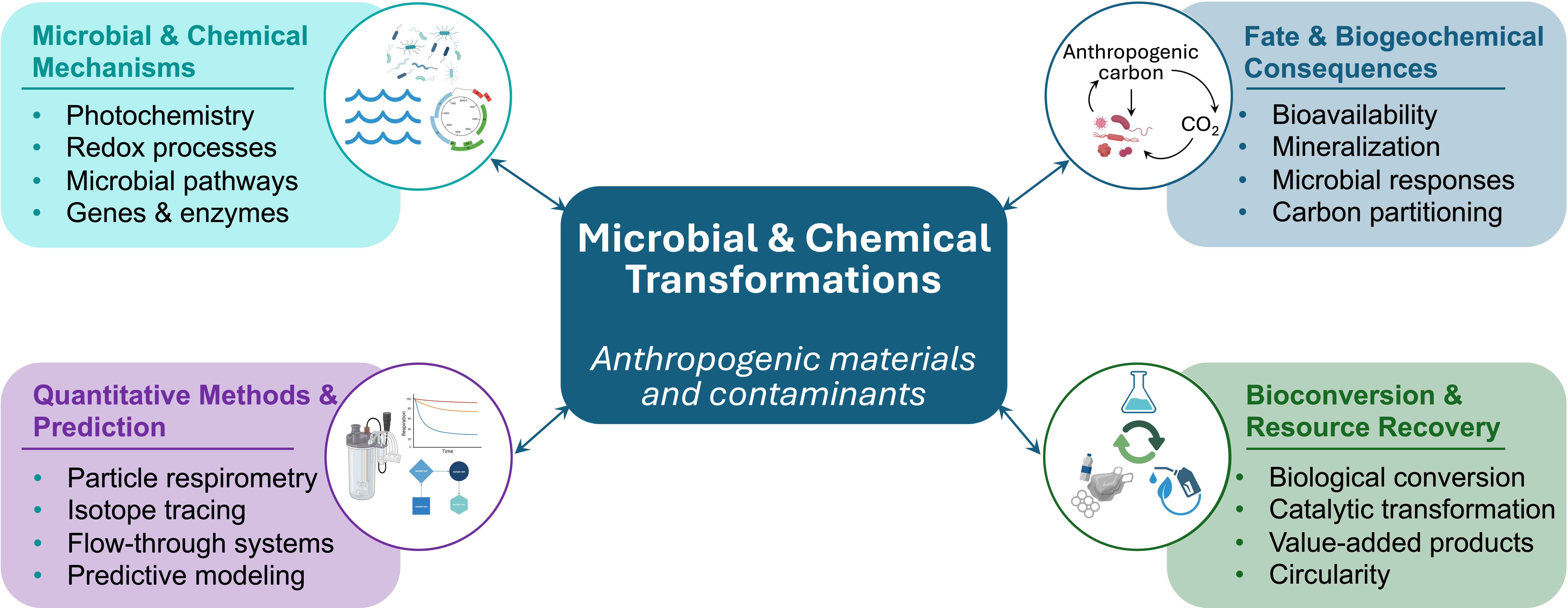
Microbial and Chemical Transformation Mechanisms
Plastics and contaminants undergo photochemical, redox, and microbial transformations that determine their environmental fate. We investigate the organisms, genes, enzymes, chemical pathways, and environmental conditions that control these processes, with current work spanning plastics, emerging contaminants, and anthropogenic carbon in aquatic systems.
Environmental Fate, Persistence, and Biogeochemical Consequences
Transformation determines whether plastics persist, are mineralized, enter biological communities, or contribute to environmental carbon pools. We study how these processes influence microbial communities, carbon cycling, and other biogeochemical pathways across terrestrial, freshwater, coastal, and marine environments.
Quantitative Methods and Predictive Frameworks
Understanding environmental transformation requires measurements that connect plastic change with biological and chemical processes. We develop experimental platforms, isotope-based approaches, respirometry, spectroscopy, and quantitative models to measure degradation, persistence, and carbon flux across material types and environmental conditions. These datasets are then used to identify dominant controls and improve prediction across environmental systems.
Bioconversion, Resource Recovery, and Circularity
The same microbial and chemical processes that determine environmental persistence can also be harnessed for controlled waste transformation. We explore biological and catalytic approaches for converting plastic and other waste-derived carbon into value-added chemicals, materials, and energy, linking environmental transformation science with resource recovery and circular engineering.